


Cumberland sausage is one of those things that sounds simple - pork, pepper, hog casings - but gets its character entirely from how those things are put together. Unlike Lincolnshire, which leans heavily on sage and is softer, more herbal in feel, Cumberland is pepper-led. Black and white pepper up front, with sage and thyme playing a supporting role and a whisper of nutmeg underneath. The result is bold, savoury, and unmistakably northern.
The other thing that sets it apart is the shape. No links. A single continuous coil, tied at both ends ... which makes it one of the easier sausages to stuff, honestly, because you're not trying to twist anything off at regular intervals.
Before you get into this, it's worth reading through the guides on how to make sausages, how to cook sausages, and the science of great sausages — they cover the fundamentals that apply to every recipe on this site.
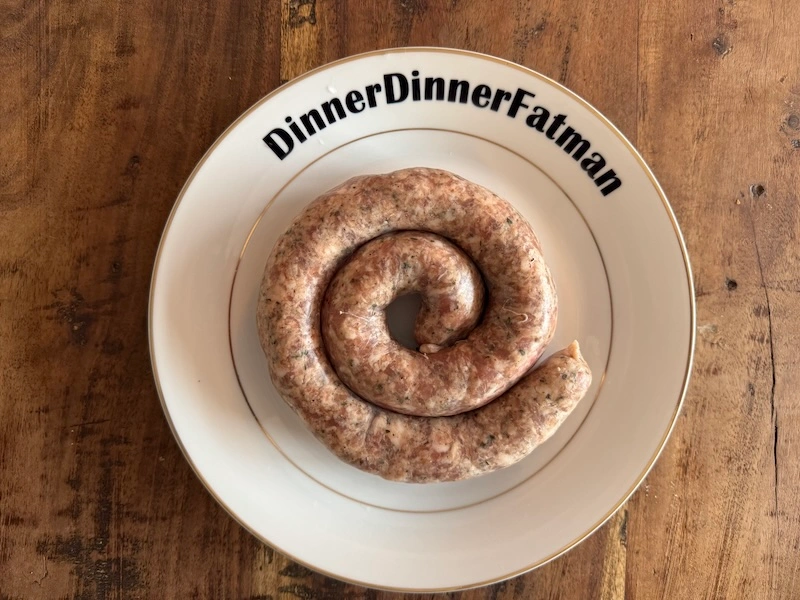
Ingredients
- Pork shoulder, diced: 750 g (26.5 oz)
- Pork fat, diced: 150 g (5.3 oz)
- Salt: 18 g (0.6 oz)
- Black pepper, ground: 6 g (0.2 oz)
- White pepper, ground: 3 g (0.1 oz)
- Fresh sage, finely chopped: 4 g (0.1 oz)
- Fresh thyme, finely chopped: 3 g (0.1 oz)
- Fresh nutmeg, grated: 0.5 g (0 oz)
- Rusk or breadcrumbs: 50 g (1.8 oz)
- Cold water: 70 ml (2.4 fl oz)
- Hog casings: 2 m (6.6 ft)
Instructions
- Dice the pork and fat, then chill in the freezer for 45–60 minutes until firm but not frozen solid.
- Soak the hog casings in warm water for at least 1 hour and chill grinder and stuffer parts if possible.
- Grind the chilled meat through a 6–8 mm plate into a cold bowl and return to the fridge.
- Measure the seasoning and soak the rusk or breadcrumbs in the liquid for 2–3 minutes.
- Add all ingredients to the mince and mix by hand until tacky and cohesive.
- Cover and refrigerate the mixture for 20–30 minutes to firm up.
- Fry a small test piece, taste, and adjust seasoning if needed.
- Stuff gently into casings, avoiding overfilling, and form into one continuous coil without twisting into links.
- Rest the sausages, covered, in the fridge for at least 12 hours before cooking.
- Cook gently by pan-frying, grilling, or baking until browned and cooked through.
How to eat it?
Cumberland sausage is built for slow cooking. A pan on medium-low heat, a bit of patience, and you'll get a deeply browned coil with juices that have nowhere to go but stay in the meat. Don't rush it - high heat and sausages don't get on.
It works brilliantly as a centrepiece on a board with mustard and bread, sliced thickly over mash with a proper onion gravy, or cut up and used as the base of a cassoulet or sausage and bean stew. It also does well in the oven, 180°C for around 25–30 minutes, turning once.
If you're comparing it to Lincolnshire, the pepper warmth here means it stands up better to richer, heavier accompaniments. Think red wine gravies, root vegetables, or anything wintery and substantial.


